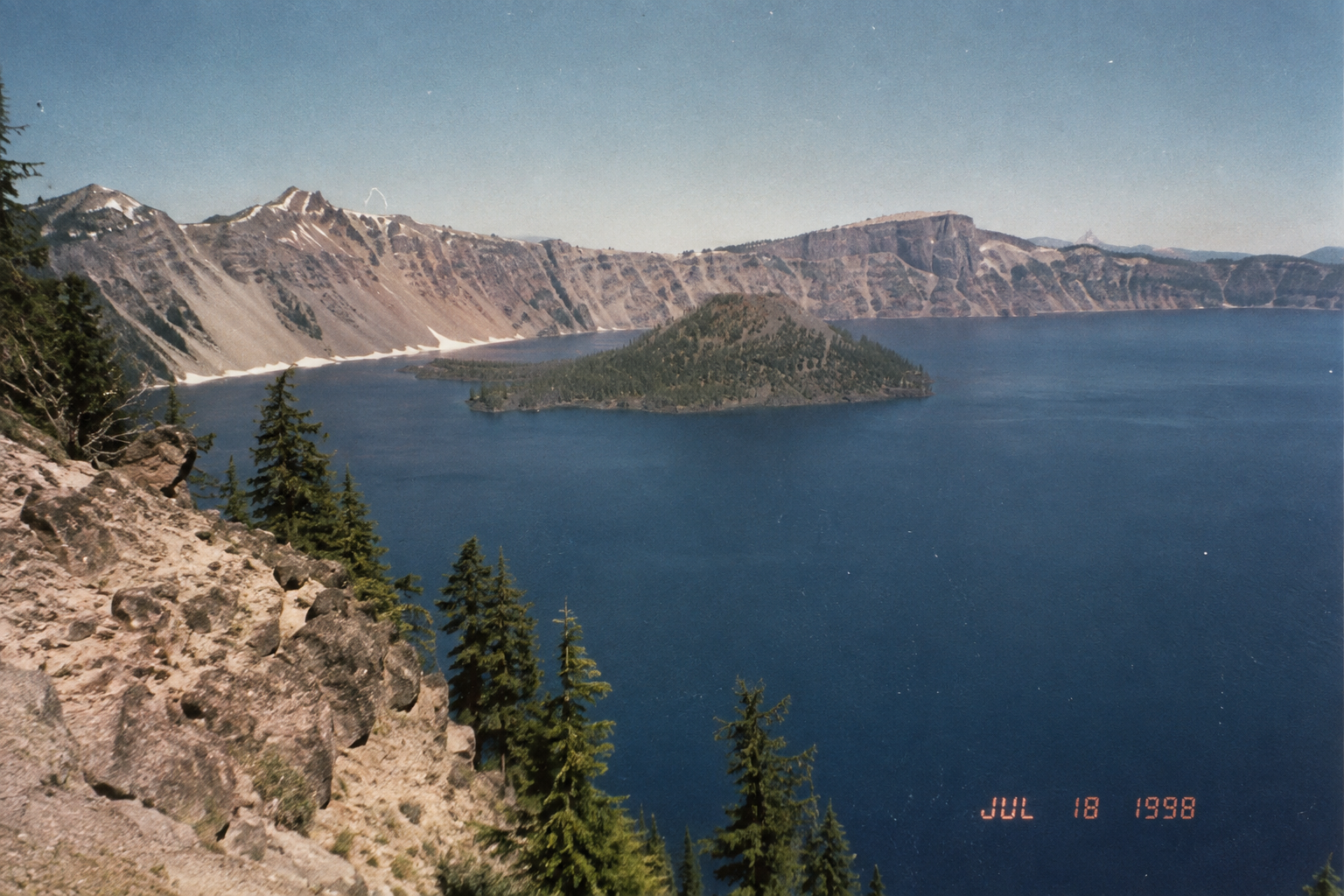
The summer I was twelve, my parents decided the family needed to see Crater Lake.
I did not need to see Crater Lake. What I needed was to be left alone in my room with the door shut, the Winamp volume up and playing Rollercoaster Tycoon.
Instead I got the back seat with my brother. I-5 south. Salem. Eugene. Roseburg. Then east, up into trees that go on so long they stop being scenery and start being a blurred wall of color.
The drive was over six hours. Six hours at twelve is not six hours. Time back there is measured in some other unit entirely. My shirt sticking to my back. A cooler of sandwiches slowly going warm. My brother's elbow drifting across the invisible border we had negotiated in good faith. My mom kept turning around with the face refugee parents make when they are giving their family The American Dream and would like acknowledgment.
Somewhere around hour four I made a decision. I was not going to give them the satisfaction. Whatever was at the end of this, I would look at it for the legally required amount of time and then get back in the car.
Then you come up through the pines and the rim just opens.
"Cool."
I gave it flat, one syllable, the way a twelve-year-old wields it like a small knife.
I was back at the car first.
I won.
Except I have never been able to unsee it. Decades worth of stuff has fallen out of my head. Phone numbers, whole jobs, names of people I talked to every day. And that blue is still in there, undimmed, filed right next to the smell of the cooler.
The card
Which brings me to a rectangle of cardboard.
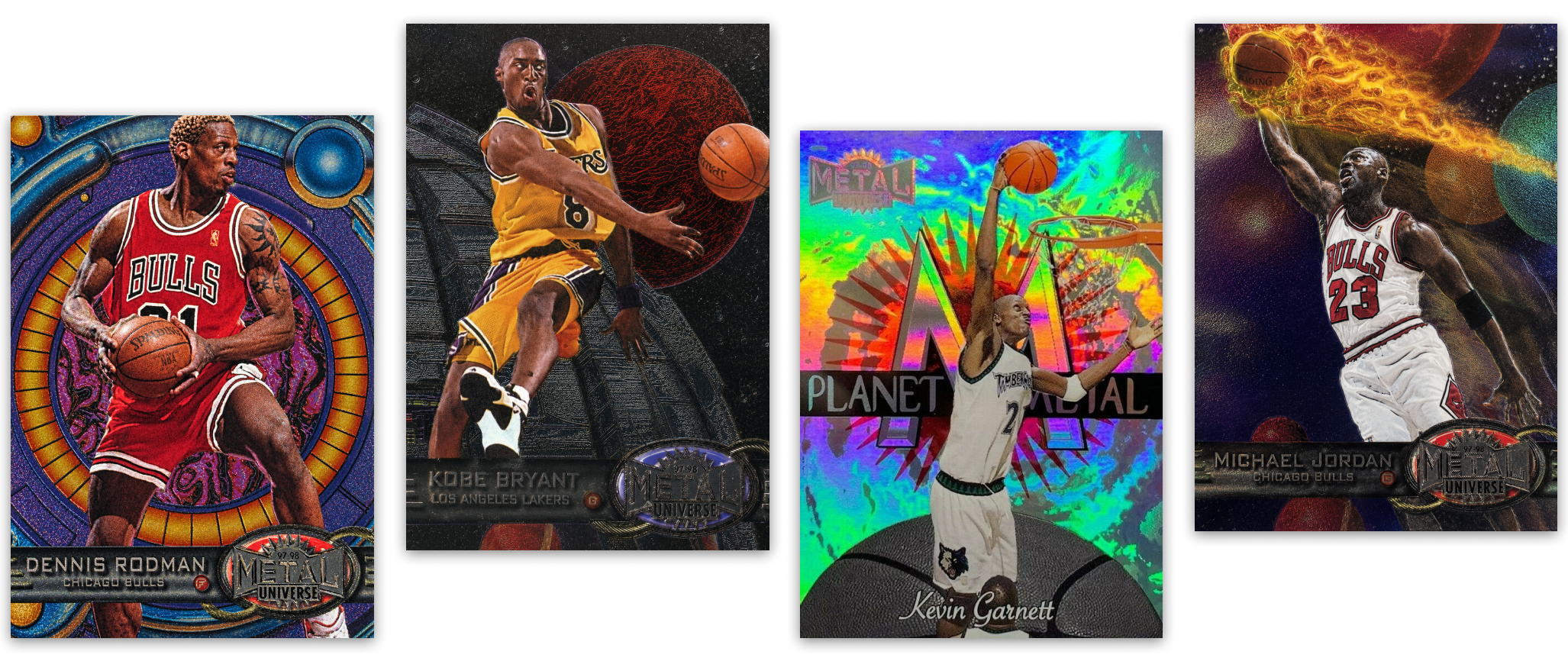
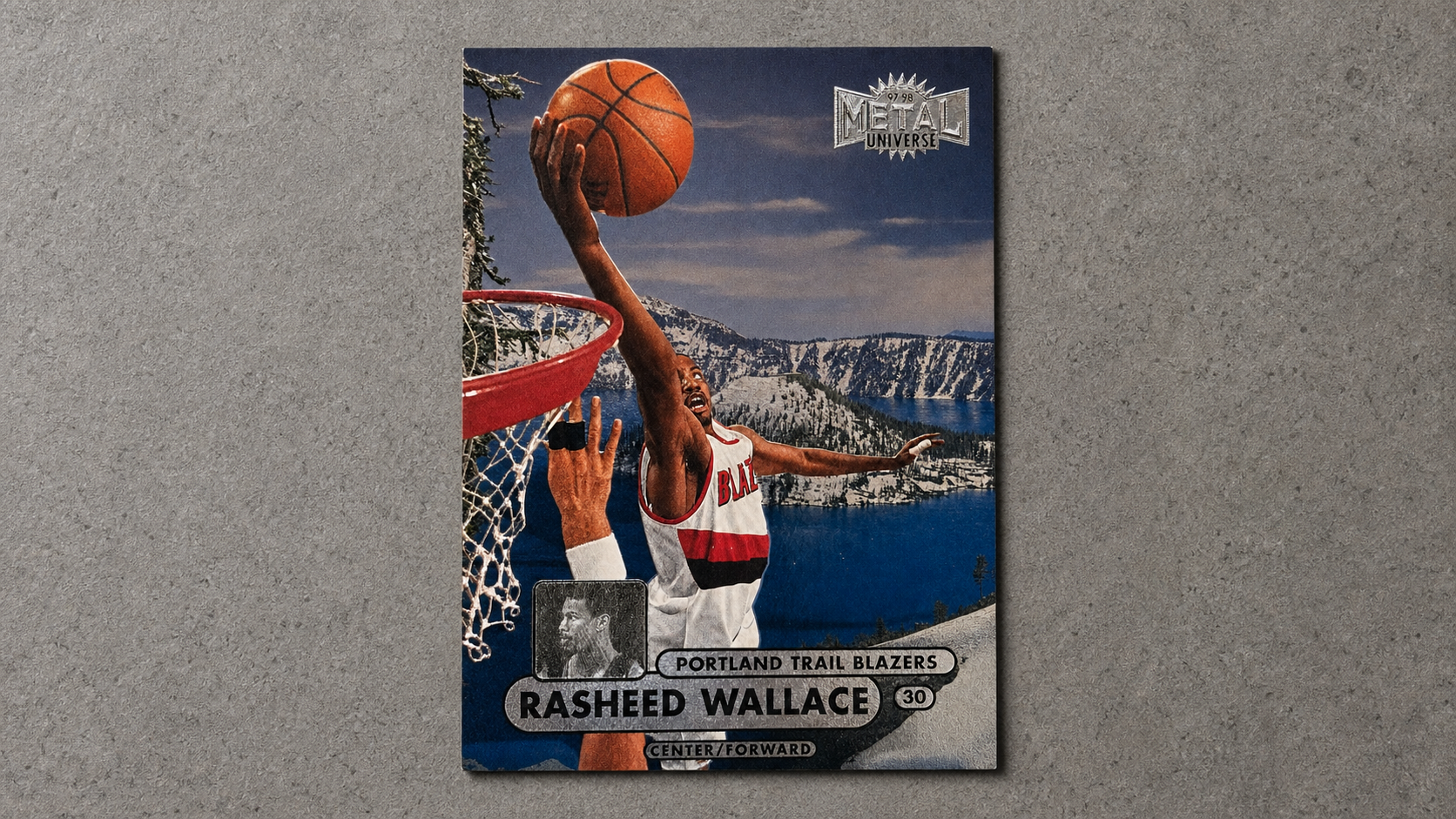
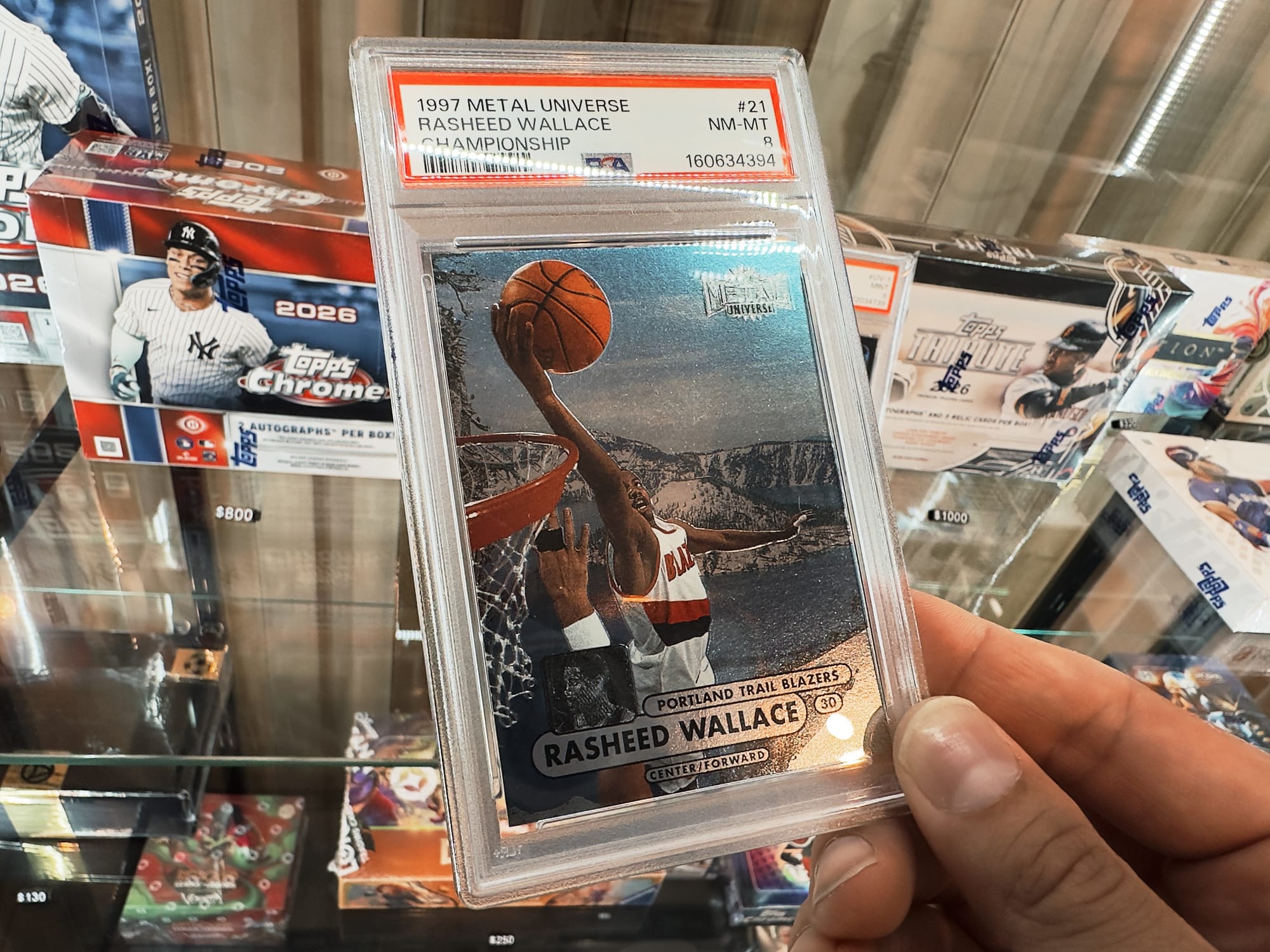
1997-98 Fleer Metal Universe Championship, card number 21. Rasheed Wallace, number 30, mid-rebound. And behind him, dropped in like it has every right to be there, is Crater Lake.
Fleer Metal Universe was one of the most successful unhinged experiments in the history of the hobby. The set had guys floating between planets and dunking in some kind of chrome dimension. Metal Universe Championship pointed the same fever at the ground instead of the sky, setting players down inside enormous, slightly hallucinatory landscapes. Somebody in a design meeting three thousand miles away said Portland, right. What's in Oregon? and made the single strangest, most personal object I own.
This is my favorite card of all time. It is not my most valuable. You can buy one for less than lunch. I had mine graded anyway for my personal collection.
A lake I got dragged to and a player I couldn't stop watching, on the same piece of cardboard, put together by a stranger who had almost certainly never been within five hundred miles of that rim.
Before
The set came out in November 1997. Sheed's first year in Portland, fresh off the trade that brought him over from Washington.
That team went 49-33 under P.J. Carlesimo and lost in the first rond to the Lakers, the fifth straight year they'd gone out in the opening round, a streak so reliable it had become part of the local weather. Sheed gave them 15 and 7 across 62 games, missing the rest of the year with a broken thumb. He finished third in the voting for Most Improved Player.
Sit with that a second.
At the moment this card was printed, the league's official word on Rasheed Wallace was improving.
Nobody had said "Jail Blazers" yet.
That's what I can't get past when I look at this card. It's a photograph of the last minute before.
After
Then came the rest of it.
Game 7 in 2000. Up fifteen in the fourth quarter against the Lakers, minutes away from the NBA Finals, and then the baskets simply stopped happening. Kobe to Shaq. Blah, blah, blah. You know the one. It's not a memory, it's a dental condition.
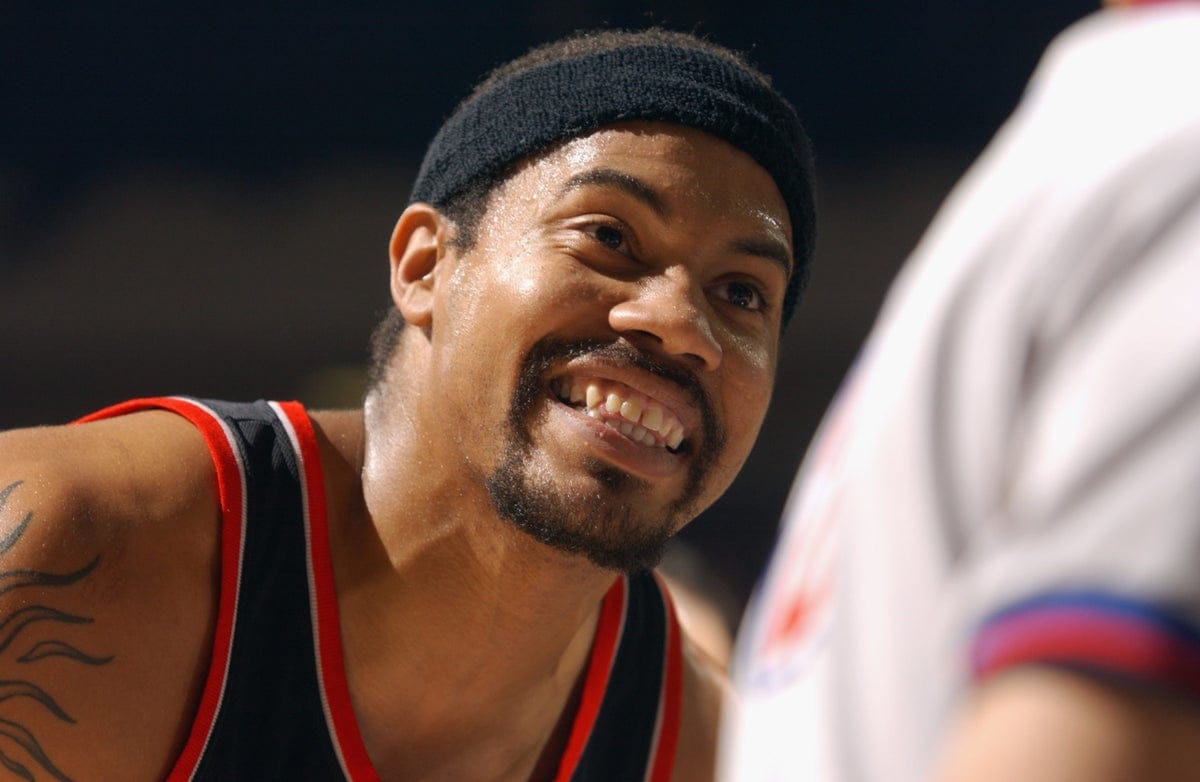
And then the era that got the nickname. Sheed set the single-season record for technical fouls. He took a seven-game suspension in 2003 for going at a referee. He answered an entire postgame press conference with "Both teams played hard," (the name of my fantasy basketball team for the past 15 years) which is either contempt or Zen and I still can't tell you which.
For a stretch there, ESPN segments about the Blazers were essentially character trials, and he was the defendant they kept calling.
Here's the part that always gets skipped: Sheed was great. A four who could actually shoot it, guarded basically anybody, never took a possession off. Every teammate he ever had would run through a wall for him. Ask any of them. They still say it. The thing he would not do, the actual unforgivable offense, was perform contrition. He would not look sorry on cue. A lot of people cannot stand that in a man, and a lot of people confused it with the man.
The lake
Crater Lake is not a lake that happens to be pretty. It's a crime scene. A mountain called Mazama stood there for a few hundred thousand years, and then roughly seventy-seven centuries ago it blew itself apart and collapsed into its own basement. No river runs in. None runs out. What's sitting in there is snow and rain that fell out of the sky and got filtered through volcanic rock for a very long time.
That's the whole trick. The bluest water most Americans will ever see is sitting in the hole where a mountain lost its temper.
And there is Rasheed Wallace in front of it, one handed board, ball coming off the glass, still a few years short of the yell that would define him.
Why that one
I don't think Fleer meant any of it. I think a guy on a deadline at Fleer needed an Oregon background and grabbed the postcard. But that card holds both halves of the same event. The eruption and the blue. The temper and the beauty that only exists because of the temper. I have never found a better picture of it anywhere.
I keep it at the shop.
"That's the one?"
"That's the one."
"There's a Jordan behind you."
"There is."
People ask why that one, when there are cards on the wall worth a hundred times more, and for a couple of years I've been giving them a short answer about the volcano because the long answer takes six hours.
Because at twelve I was certain the anger was the truth and the destination was the punishment. It took me considerably longer than six hours to work out that it was the other way around. The ride I resented was the part that counted, and the stuff I was so sure was ruining me was mostly just weather.
My mother came a very (very) long way from a war torn country and then we drove six hours to show me something beautiful.
I gave her one syllable.
Sheed would not give the league the apology it wanted. I would not give my mother the face she wanted. Neither of us was wrong about what we owed. We were both wrong about what it cost.
The mountain had to come apart to get that blue. Sheed had to be all the way himself to be that good, and the media and fans that couldn't forgive him are the ones that haven't shut up about him in twenty-five years, which is its own kind of love. And some kid had to sulk across six hours of highway to end up, decades later, running a card shop with that exact view sitting in a display case.
I should probably call my mom.