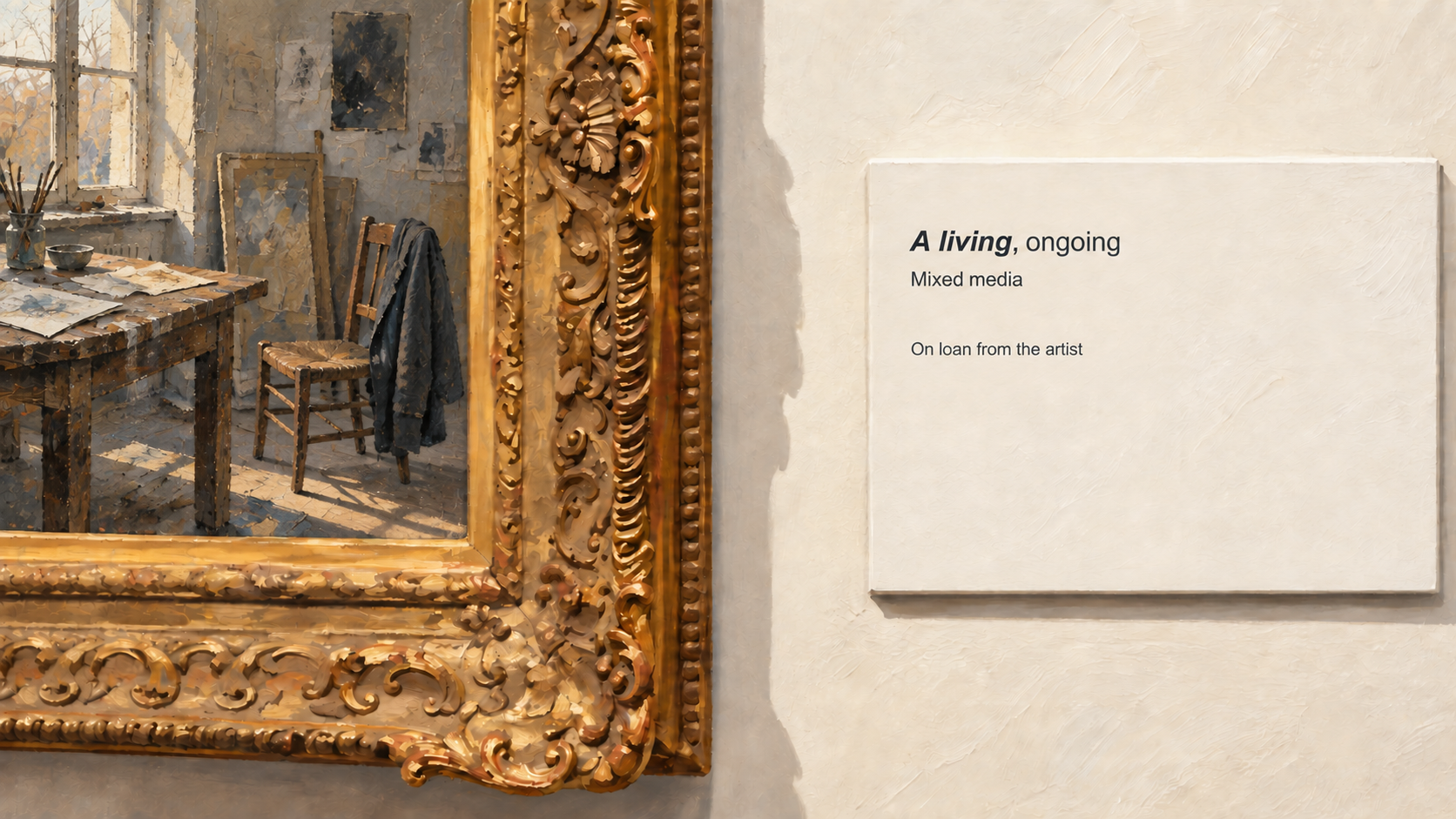

The little placard on the wall next to a painting has a name. Museum people call it a tombstone. We called them that too.
It's a good name for it. Artist. Birth and death years. Title. Date. Medium. Dimensions. And at the bottom, the credit line: gift of, purchased with funds from, on loan courtesy of. Somebody's whole effort, and the people who made it possible for you to be standing in front of it, compressed into six or seven lines of type you read in about four seconds before you look back up at the thing.
There's no line on it for how the artist felt. Whether they loved the work while they were making it. Whether they still loved it by the end. Whether they ever wanted to make another one.
And there's no line for what they went home to.
Every tombstone gets two dates. When it started. When it ended.
I used to set those dates in type.
It never crossed my mind that passion can have a start and end date too.
The end date on mine almost got set more than once.
The start date, I can tell you exactly.
A work study job in college. $7.25 an hour.
$7.25
My work study job in college was a graphic designer. It paid $7.25 an hour. I made the posters you'd see taped up around campus, I made web stuff back when making web stuff meant something different than it does now, and I made the tombstones for the exhibits at the art museum. Kerning somebody's dates. Checking that "oil on canvas" was spelled right. Mounted on a piece of foam core with spray glue, gator board if they were fancy. Lots of X-ACTO knife precision to bevel the edges.
Tiny work.
I loved it.
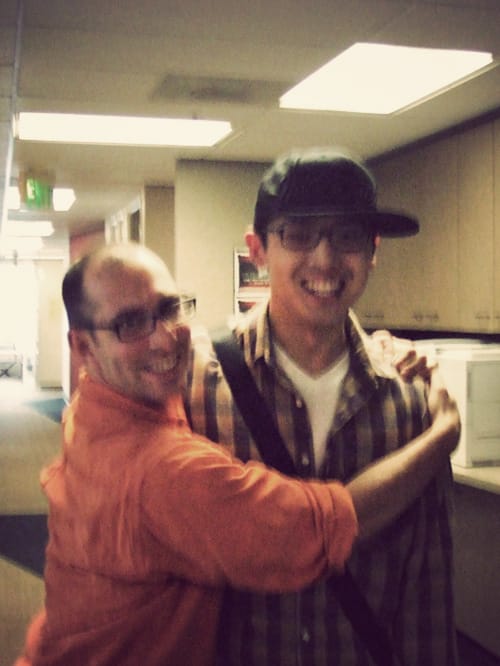
I did it with my best friend, Ryan. We took our smoke breaks outside together, and they never felt like breaks from work. It felt like standing outside a club we were about to walk into.
"Can you believe we're getting paid for this?"
"What are you gonna do with your paycheck?"
Neither of us ever had a good answer to the second one. Cigarettes, usually. Or a new shirt from The Hundreds or 10Deep.
The answer to the first one was always no.
That's what passion looks like at the start. It looks like getting away with something.
$800
After I graduated I got paid $800 for my first real freelance job. A logo and a website. I thought I had struck it rich. I didn't have an art degree, and here I was making art and somebody was paying me for it.
I'd found the side door.
Here's the thing about the side door. When you don't have the degree, you build your own out of hours. Nobody hands you a curriculum, so you assign it to yourself, and you assign a lot of it, because some part of you is always waiting for someone in the room to ask where you went to school. I thought I'd escaped the system. What I actually did was pay the tuition in time instead of money.
I still think about whether I would have worked less if I'd just gone and gotten the degree. I don't know. I've gone back and forth on it for twenty years and I haven't landed. It's possible the hours were never about the degree, and the degree was just the most respectable reason I could find for the hours.
I was young and I could burn it at both ends. I was getting paid, I was working with amazing people, and I was meeting everybody in the Portland tech scene. Every night was a reason to stay late and every morning I came back for more.
Nothing could stop me.
And then, somewhere in there, I started to smell smoke.
The labor of love
For designers the work isn't a thing you do. It comes out of the same part of you that picks your clothes and your music and the way you talk. People look at your work and they're looking at you, and you know it, and you start to believe it too. That's what makes it a relationship. And relationships sour.
Sarah Jaffe is a labor journalist, and in 2021 she wrote a whole book about this and put the argument in the title: Work Won't Love You Back. Her target is an idea she calls the labor of love. It's the story we tell about certain kinds of work (art, teaching, nonprofits, the creative jobs) that says the work is supposed to be its own reward. The pitch, as she puts it, goes something like: you don't do this work for the money. You do it because you care about it.
Every designer I know has heard some version of that pitch. Most of us said it to ourselves first, before anyone else had to. We just called it passion.
Jaffe's point is that the love only runs in one direction. The job is there on Monday. It's there when you're sick. It was there before you got hired and it'll be there after you leave, and it will not think about you once. And her answer isn't to love it harder. It's to see the pitch for what it is, work less, and ask for what the work is actually worth.
I wish I'd read that fifteen years earlier. I would have argued with it.
I would've been wrong.
The burnout
I've burned out more times than I will ever be able to remember.
Twelve hours of Zoom a day. An international team, which means the day never really ends, it just changes time zones. Every call was a fire. You'd get off one and there'd be two more waiting, and somewhere in all that firefighting the actual design work, the part I got into this for, turned into the thing I did in the gaps, if there were gaps.
And then, next thing you know:
Two kids.
Divorced.
Trying to build a life back from whatever was left standing.
I can't tell you exactly where the burnout ended and the rest of it began. I've stopped trying to draw that line. What I can tell you is what it did to the work. I was a walking existential crisis in a nice pair of shoes, questioning everything: the work, my decisions, my life. I'd loved design since I was making posters for $7.25 an hour.
Now I couldn't bring myself to open a design file.
The way back
It was slow. Slower than I like to admit, and it was tangled up in the divorce. I couldn't get the work back without getting my life back, and I couldn't get my life back on a schedule.
What got me through was people. I have a strong group of close friends, and for a long stretch, somebody checked in on me every single day. Every day. I had real support from work, from people who could have just asked where the deliverable was and asked how I was doing instead.
I dated. A lot. And somewhere in there, when I'd stopped looking for it, I found love again.
I setup rituals and processes to manage my time and did a much better job delegating tasks and unblocking my team.
The work came back after all of that. Not before.
Don't read that as a plan. I got back on track, and I'm doing better work now than I did in the years I was burning both ends. But the burnout didn't teach me that. I got here in spite of it, with a lot of help, and with some luck I didn't earn.
That's survivorship, not strategy.
I have a friend who burned out as hard as I did.
I got back. They haven't.
They could get a job tomorrow. That's not the problem. The problem is there's nothing they want to make. They fell out of love with the work all the way down, and it still hasn't come back.
Same fire. Different ending.
Nobody tells you in advance which one you're going to get. Sometimes burnout borrows the love and gives it back. Sometimes it just keeps it.
Do what you love
In June 2005, Steve Jobs stood up at Stanford and gave the most famous version of the advice every young designer has heard:
"Your work is going to fill a large part of your life, and the only way to be truly satisfied is to do what you believe is great work. And the only way to do great work is to love what you do."
I believed that. I built my twenties on it. Jobs wasn't wrong about his own life. But the advice has a hole in it, and I fell through the hole. So did my friend.
Stay hungry, stay foolish.
If your work runs on love, then the work is only as strong as the love. And love is the first thing burnout takes. Nobody at the podium tells you what to do on the morning the love doesn't show up. You're left standing in front of the thing that used to be your whole identity, feeling nothing, and the only instruction you were ever given was love it.
Cal Newport spent a whole book, So Good They Can't Ignore You, arguing the order is backwards:
"Passion is a side effect of mastery."
Get good first. The love tends to follow the skill, not the other way around.
That doesn't mean don't have passions. Have plenty. I've written before about side quests. None of them pay my mortgage. That's exactly why I still love them.
That's where passion gets to live. Somewhere nothing is riding on it. The question is which one you ask your job to pay for.
Pick the one you're good at. Not the one you love most. The one you're good at. Let the rest stay side quests. Your job can't pay you for how much you love something. It pays you for how good you are at it, and it pays you more the better you get. Get paid for the thing you're good at and the love has something solid to grow on. Get paid for the thing you only love, and the first bad year takes both.
Before I got into advertising, a copywriter I looked up to, Geoffrey, asked me if I really wanted to do this. Then he asked again. Then again, a little differently each time, like he was pressing on it to see if it would crack.
"You sure you want to get into advertising?"
"Yeah."
"Really sure?"
"I'm sure."
"You truly, really want this?"
He knew how ugly it could get. I didn't. I thought he was checking whether I was serious. He was giving me a chance to walk away before it cost me anything.
Now I'm the one asking. When a niece or nephew or a new designer comes to me for advice, they get the same question, three times, a little differently each time. I'm not trying to talk anyone out of it. I want them to know it won't look the way it does in the mirror. What you love looks one way when it's yours. It looks different when it's your job.
The credit line
These days a big part of my job is running design teams. So I've had to figure out what to build people's careers on instead of passion, because you can't manage someone into feeling something, and I'm not going to try.
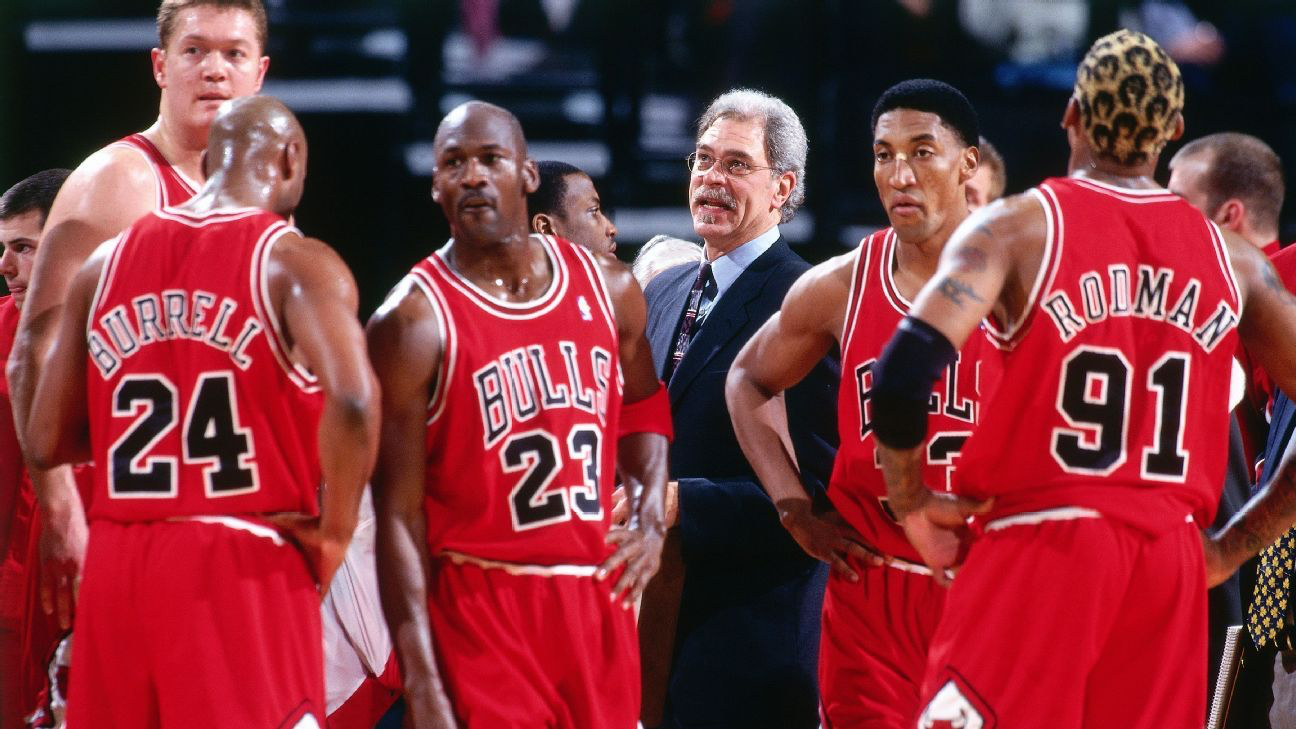
Phil Jackson won eleven championships as a coach, and in Eleven Rings he says the thing I've been circling for about twenty years:
"Winning is important to me, but what brings me real joy is the experience of being fully engaged in whatever I'm doing."
Engaged. Not in love. Engagement is something I can actually work on. I can look at a designer and tell if they're engaged. I can figure out why they're not. I can move something out of the way.
In America the standard work week is 40 hours, Monday through Friday. That's 2,080 hours a year in front of a screen. That's a lot of hours to be stuck. So when someone on my team isn't producing, I don't read that as a character problem. I read it as a block. Maybe it's creative. Maybe it's another person on the team. Maybe it's something at home they haven't said out loud. Whatever it is, it's ours to figure out, together. Maybe the answer is a walk around the block. Maybe the answer is a week off. I've prescribed both.
My goal with any team is simple to say and hard to do: everybody on it should be doing the best work of their lives, and growing as designers while they do it. That's my job. Not a nice-to-have. The job.
Ed Catmull ran Pixar and said it better than I can in Creativity, Inc.:
"If you give a good idea to a mediocre team, they will screw it up. If you give a mediocre idea to a brilliant team, they will either fix it or throw it away and come up with something better."
So the idea isn't the job. The team is the job.
And every designer is different. Every team is different. Jackson used the triangle offense because it gave every player a real role and a lot of room to be creative inside a clear structure. That's the closest thing I have to a management philosophy: a structure people can lean on, and inside it, room to be themselves. Jackson again:
"The strength of the team is each individual member. The strength of each member is the team."
My name doesn't go at the top of the placard anymore. It goes at the bottom, in the smallest type, on the credit line. Made possible by. Almost nobody reads that line, and that's fine. It only has to be true. If the work on the wall is good, my team looks good. And if my team looks good, I look good.
Other people's mistakes
Most of what I know about leading, I learned by watching. I've worked with a lot of leaders and a lot of clients over twenty years, and some of them had shortcomings. So do I. I'd rather learn from someone else's mistake than make my own version of it, so for years I've kept a quiet list. Every time I saw something land wrong in a room, I wrote down what I'd do instead.
That list is how I started to form my management style. It's not a philosophy. It's a collection of things I watched not work.
Every time I join a team, I say some version of this in the first week:
I don't ever want anyone on this team to burn out.
I mean it when I say it. I'm printing it here because I'm about to take it back.
I can't promise that. Nobody can. I burned out at jobs where nobody asked me to stay on that many calls. I said yes to every one of them, because I was chasing a feeling. A manager can't outlaw burnout any more than a lifeguard can outlaw drowning.
What I can actually promise is less impressive and more real. I can be paying close enough attention to see it coming before you do. And I can make it cheap to tell me. No speech, no performance review, no look on my face. You say "I'm getting cooked," and we figure out what comes off your plate. I protect your time and make sure the team grows collectively.
People checked on me every day until I got back. That's the job now. I made it back. I don't want anyone on my team finding out whether they would.
The reps
I don't remember a single tombstone I made. Not one artist. Not one title. Not one set of dates I lined up at $7.25 an hour.
What I remember is the feeling. The clock running, and not being able to believe anybody was paying me for this.
That was passion. It was real, and it was great.
Then I spent the next decade trying to get it back. More calls. Later nights. Bigger swings. More of myself poured into every file, looking for the rush I had at the start.
That's what burnout was for me. Not too much work. It was chasing a feeling that had already left.
The work is something else. The work is the kerning. Animation easing curves. The fourteenth round of a logo. The critique you didn't want to hear and needed.
Sitting down on a Tuesday when nothing is exciting and getting a little better anyway. It doesn't need you to feel anything to show up. It just needs you to show up. And if you keep showing up, Newport's right: the feeling tends to come find you. It just comes in the side door, the way I did.
That's what I'm actually managing when I run a team. Not anyone's passion. The conditions. Clear the blocks, protect the forty hours, make sure the reps are good ones. Jackson one more time, from Eleven Rings:
"The most we can hope for is to create the best possible conditions for success, then let go of the outcome."
The best work of your career doesn't come from the year you spent twelve hours a day on Zoom. It comes from year eight of doing it right, on a schedule you can keep. I learned that the expensive way.
My friend is still paying for it.
You don't have to.
So here's what I tell them now. My nephews and nieces. The young designers who buy me coffee to ask how I got here. The new ones a month into their first real job, already staying late.
Have all the side quests you want. Get paid for the one you're good at. Fall in love with getting better, not with the feeling, because the feeling leaves and some of it doesn't come back.
The placard on the wall won't remember any of it. It isn't supposed to.
Ryan asked me a question on one of those smoke breaks, 15-some years ago, and I never gave him a good answer.
What are you gonna do with your paycheck?
It took me two decades, thousands of Zoom calls, two kids, a divorce, and a group of friends who checked on me every single day to figure it out.
I take it home.